
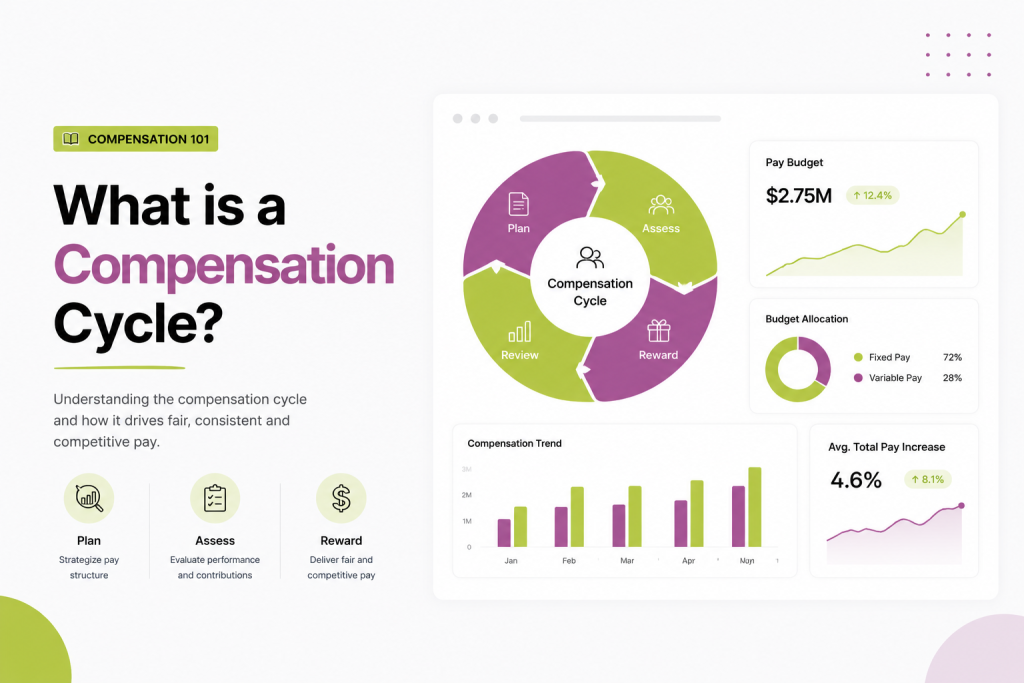
If you work in HR or compensation, you already know the feeling. Spreadsheets everywhere. Slack messages piling up from managers asking about budget. A deadline that keeps slipping because someone forgot to submit their recommendations.
That’s the compensation cycle in most companies today. It doesn’t have to be this way.
This guide breaks down what a compensation cycle actually is, the stages involved, who owns what, and how to run one without losing three weeks of your life.
- ✓ A compensation cycle is the structured process companies use to review, adjust, and communicate employee pay, covering merit increases, promotions, and bonuses.
- ✓ It runs through 7 stages: planning & budgeting, market benchmarking, manager recommendations, calibration, approval, communication, and payout & documentation.
- ✓ HR, Finance, managers, leadership, and the HRIS/comp platform all own a piece of the process, and unclear ownership is a top cause of delays.
- ✓ Most companies run one annual cycle plus off-cycle adjustments for new hires, promotions, and retention counters.
- ✓ Common breakdowns include spreadsheet chaos, manager delays, inconsistent guidance, poor budget visibility, and weak communication at payout.
- ✓ Centralizing data, starting early, and building calibration into the timeline are what separate smooth cycles from painful ones.
What is a Compensation Cycle?
A compensation cycle is the structured process a company uses to review, adjust, and communicate employee pay. It typically covers merit increases, promotions, bonuses, and sometimes equity refreshes.
Most companies run one major cycle per year, usually tied to the fiscal year or performance review season. Some run additional off-cycle adjustments throughout the year for promotions, new hires, or retention concerns.
The cycle isn’t just about giving raises. It’s how a company translates its compensation philosophy into actual numbers, on actual paychecks, for actual people.
The Stages of a Compensation Cycle
Every compensation cycle moves through a similar sequence of stages, even if the tools and timelines differ.
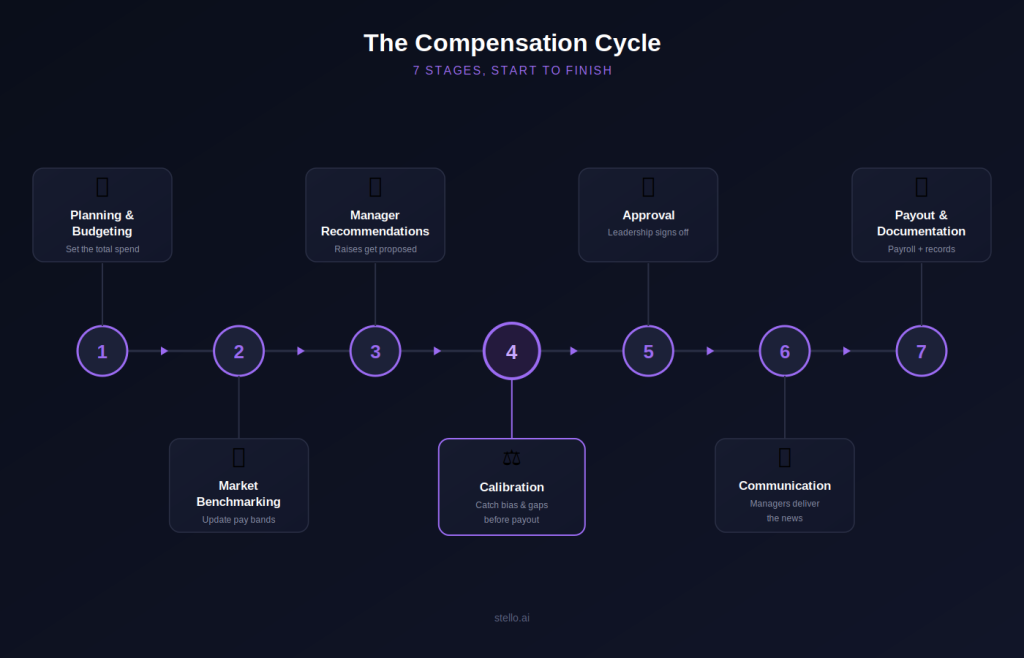
1. Planning and Budgeting
This is where finance and HR set the total budget for the cycle. Leadership decides how much the company can spend on merit increases, promotions, and bonuses, usually as a percentage of total payroll.
Budget gets allocated down through departments and teams, often adjusted for performance ratings, market data, and business priorities.
2. Market Benchmarking
Before managers make any recommendations, comp teams pull market data to understand where employees sit relative to their role, level, and location. This is where pay bands and salary ranges get updated based on current market conditions.
Without solid benchmarking, the whole cycle risks drifting away from market reality, which creates retention risk down the line.
3. Manager Recommendations
Managers get access to their team’s compensation data and budget, then submit recommendations for raises, bonuses, or promotions. This stage is usually the most time-consuming part of the cycle, and the one most likely to cause delays.
Managers need context here. Performance ratings, peer comparisons, and clear guardrails all help them make fair, defensible decisions instead of guessing.
4. Calibration
Recommendations don’t go straight to paychecks. They go through calibration first, where HR and leadership review decisions across teams to catch inconsistencies, bias, or budget overruns.
This is where a manager who rated everyone a 5 out of 5 gets flagged, and where pay equity gaps get caught before they become a legal or trust problem.
5. Approval
Once calibration wraps, final numbers go up the chain for sign-off. Depending on company size, this might mean a single VP approval or multiple layers of leadership review.
6. Communication
Managers deliver the news to their employees. This stage matters more than most companies treat it. A well-communicated 4% raise can land better than a poorly explained 6% one.
Comp teams often prepare talking points or guides here to help managers explain the “why” behind each decision, not just the number.
7. Payout and Documentation
Finally, the approved changes get pushed into payroll systems, and everything gets documented for audit and compliance purposes. This includes updated offer letters, pay statements, and internal records.
Also read: How to Conduct Salary Benchmarking: A Practical Guide for HR and Compensation Teams
Who Owns the Compensation Cycle?
A compensation cycle touches more teams than people expect.
- HR and Comp teams design the process, set guidelines, and manage calibration.
- Finance sets and monitors the budget.
- Managers make individual recommendations for their direct reports.
- Leadership approves final numbers and sets overall philosophy.
- HRIS or comp platforms hold the data and workflows that keep everyone aligned.
When ownership is unclear, cycles drag. The most common failure point is managers not having the context or tools to make fast, informed decisions, which pushes deadlines back for everyone else.
Also read: Where AI Belongs in HR Data Work (and Where It Doesn’t)
Annual vs. Off-Cycle Adjustments
Most companies anchor their main compensation cycle to once a year. But pay decisions don’t stop just because the annual cycle ended.
Off-cycle adjustments handle:
- New hire negotiations
- Promotions that happen outside the review window
- Retention counters for employees with competing offers
- Market corrections when pay bands shift mid-year
A mature comp function has a clear process for both, so off-cycle requests don’t turn into ad hoc, undocumented decisions that create pay equity problems later.
Common Compensation Cycle Challenges
Even well-run companies hit friction points. The most common ones:
Spreadsheet chaos. Version control issues, formula errors, and manual data entry eat up hours that should go toward actual decision-making.
Manager delays. Managers are busy, and compensation recommendations often sit at the bottom of their to-do list until HR starts sending reminder emails.
Inconsistent guidance. Without clear guardrails, managers make wildly different decisions for similar situations, which creates equity gaps.
Poor visibility into budget. Managers who can’t see real-time budget impact tend to either overspend or under-recommend out of caution.
Weak communication. Employees remember how a raise was delivered as much as the number itself. A rushed or vague conversation can undo the goodwill a raise was supposed to create.
Also read: 7 Tasks an AI Compensation Agent Can Take Off Your Plate This Year
How to Run a Better Compensation Cycle
A few practices consistently separate smooth cycles from painful ones.
Start earlier than feels necessary. Budgeting and benchmarking should wrap well before managers need to make recommendations.
Give managers real context. Performance data, market bands, and peer comparisons should be visible at the point of decision, not buried in a separate system.
Build calibration into the timeline, not as an afterthought. Treating calibration as a real stage, with dedicated time, catches problems before they reach employees.
Centralize the data. When compensation data lives in one system instead of scattered spreadsheets, cycles move faster and errors drop.
Prepare managers for the conversation, not just the number. A short communication guide goes a long way toward making raises land well.
Why the Right Tools Matter
Most of the friction in a compensation cycle isn’t about people making bad decisions. It’s about people making decisions without the right data in front of them, on deadline, in a spreadsheet that breaks the moment two people edit it at once.
A dedicated compensation management platform brings budgeting, benchmarking, manager workflows, calibration, and payout documentation into one place. That means fewer emails chasing managers, fewer calibration surprises, and a cycle that closes on time instead of three weeks late.
Final Thoughts
A compensation cycle is more than a once-a-year scramble to hand out raises. Done well, it’s a structured process that keeps pay fair, competitive, and aligned with company strategy, while giving managers and employees a clear, consistent experience.
Get the stages right, clarify ownership, and give your managers the context they need, and the cycle stops being something HR dreads every year.